You might be curious why Obsidian, which seems like a boring editor, is still so widely used.
This article is not an advertisement; it is a personal experience sharing, written by hand.
Many products that allow you to "collect everything" strive to reduce your friction, such as browser extensions, public account saves, and Raycast plugins.
The core of Obsidian's model lies in increasing the "friction" of the collection process. To store something effectively, you need to manually organize and summarize it; otherwise, it cannot be saved properly.
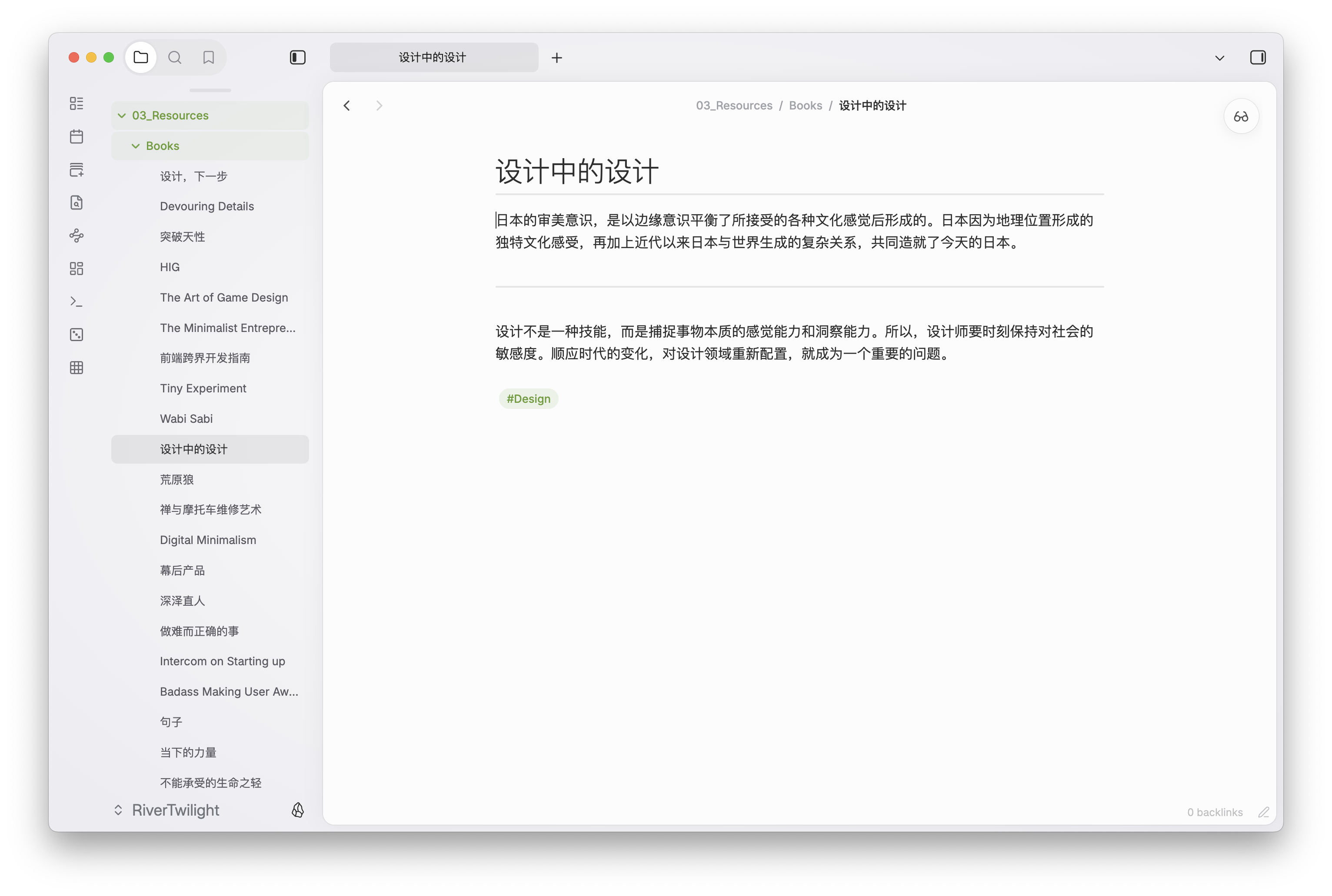
For example, if I find an X post that I like, I first need to download the video, then find a suitable Note or Canvas in Obsidian to store it. Additionally, to facilitate indexing, I must carefully think of an appropriate title or tag. Similarly, if it’s a text post, I need to manually copy it into Obsidian, format it, and finally summarize it with a title.
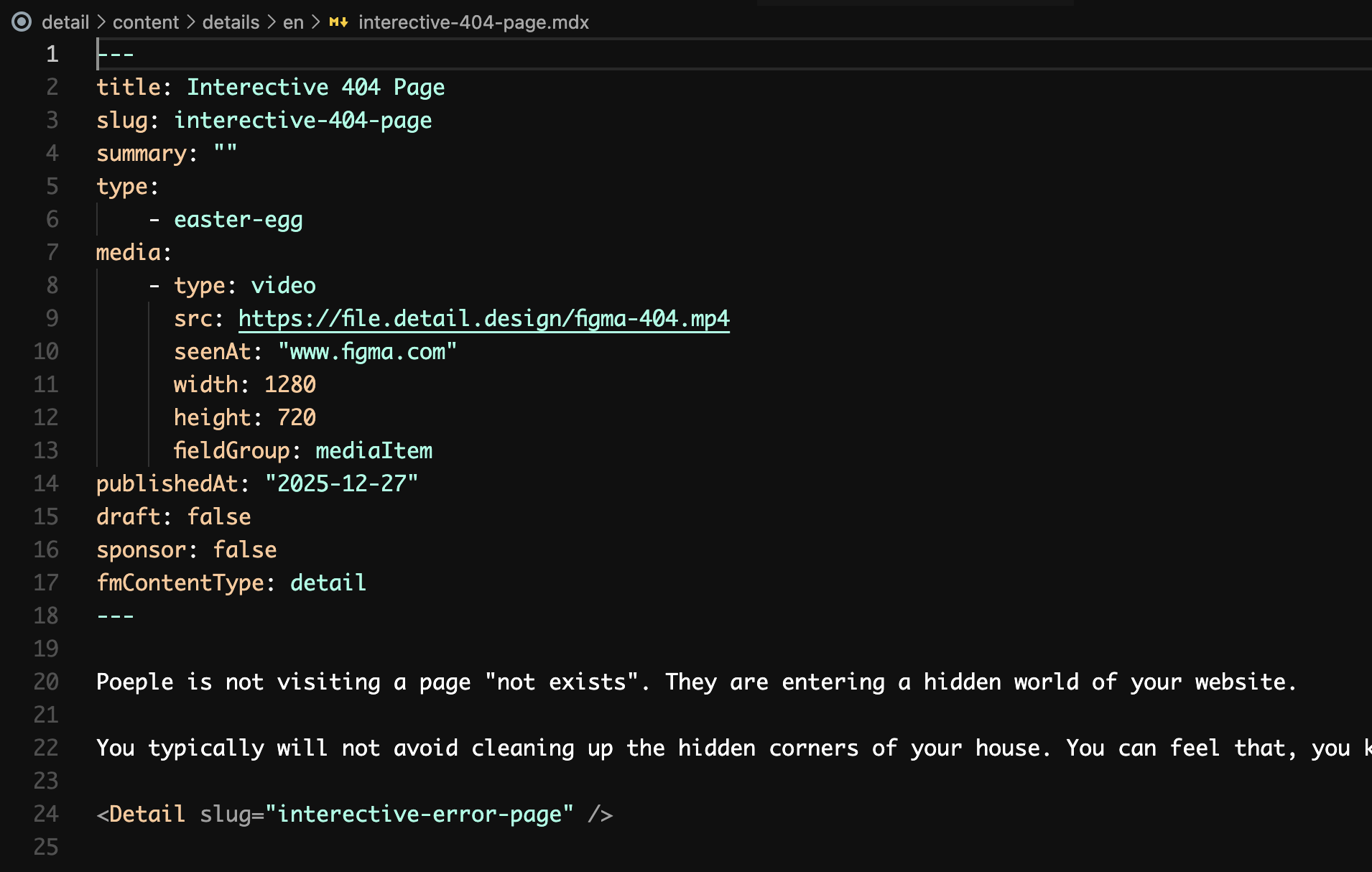
To give another example, if I discover an excellent motion video, I will organize it in Detail. This is a process with high friction. I must first download the video, then create a new file, come up with a title, write a summary, add tags, and finally insert the video.
This seemingly simple "digital garden" model greatly enhances my content filtering, effectively filtering out noise and allowing truly valuable content to enter my garden.
You might say: What if I miss out? What if I can't find it later? The answer is: "The truly important things will find a way into your mind." What you save in your favorites may not be that link, but rather your anxiety.
You might think that by saving something in your favorites, you won't lose it, and it has already become "yours." I often have this inertia: I must quickly record everything I am interested in and then organize it later when I have time.
However, just like the overwhelming content on the internet, if your garden is overflowing, it will ultimately become a weedy wasteland. Quality is far more important than quantity.
So, back to the title: a good digital garden should be a "high-friction" digital garden, not just a place where anything can be thrown in. It could be Obsidian's Vault or, even further, a website that requires manual maintenance. The core is that you need to continuously prune, organize, and cultivate, rather than just leave it there and expect it to be useful someday in the future.
Inspiration occurs in that high-friction process, not in the relaxation that follows a one-click save. Just like the best doodles from childhood were drawn casually in textbooks, without the need for a refined canvas.